Summer is here, which means longer road trips, late-night returns, and more time behind the wheel after dark. For many drivers, night driving feels peaceful — lighter traffic, cooler temperatures, and open highways. But the statistics tell a different story: while only about 25% of driving happens at night, nearly 50% of fatal crashes occur during those hours.
Mix night driving with large commercial trucks, and the stakes rise even higher. At the Dave Fons Memorial Fund, we want every driver — professional and passenger alike — to arrive home safely. Here’s how to handle nighttime miles with greater awareness, especially when sharing the road with trucks.
Why Night Driving Is Different

Even with healthy eyes, depth perception, color recognition, and peripheral vision all weaken in low light. Add in the oncoming glare of headlights, and your brain is working overtime to interpret signals it handles effortlessly in daylight.
For truck drivers, the challenges multiply. A semi-truck sits much higher than a passenger car, which changes the angle of oncoming headlights. Truckers deal with:
- More reflected glare from wet roads and signs
- Longer reaction distances because stopping 80,000 pounds takes time — even more at night when hazards appear later
- Greater fatigue risk on long-haul routes that run overnight
Fight Fatigue Before It Fights You

Drowsy driving is as dangerous as drunk driving. The National Highway Traffic Safety Administration estimates that being awake for 18 hours produces impairment equivalent to a 0.05% blood alcohol content. At 24 hours, it matches a 0.10% BAC — above the legal limit.
To stay sharp at night:
- Don’t start tired. If you’re already exhausted at 8pm, don’t plan a 10pm departure.
- Know the warning signs. Heavy eyelids, drifting out of your lane, missing exits, or suddenly not remembering the last few miles — pull over. Those are your brain’s final warnings.
- Stop every 2 hours. Even a quick walk around a rest area resets your alertness.
- Skip the “energy” quick fixes. Coffee and energy drinks mask fatigue; they don’t cure it. The only real fix is sleep.
- Travel with a partner when possible — someone to watch for drift and share conversation.
Master Your Headlights
Your headlights are your lifeline at night — but they’re only useful if you know how to use them right.
- Clean them regularly. Dirty or foggy headlight lenses can cut light output by up to 80%.
- Aim them properly. If your beams point too high or low, you’re either blinding others or missing hazards. Most shops can check alignment in minutes.
- Use high beams wisely. On dark rural roads, high beams reveal far more. Drop them to low beams when a vehicle is within 500 feet coming toward you, or when following within 300 feet.
- Don’t stare at oncoming lights. Shift your gaze to the right edge of your lane. You’ll see the road without burning your retinas.
Give Trucks Even More Space at Night

Everything we tell drivers about sharing the road with trucks in daylight goes double at night:
- Stay out of blind spots. They’re even harder for truckers to check after dark.
- Extend your following distance to at least 5-6 seconds behind a truck — up from the daytime 4-second minimum.
- Pass quickly and cleanly. Don’t linger alongside a truck where the driver may struggle to see you against other traffic.
- Dim your high beams when approaching or following a truck — the driver’s mirrors will catch and amplify the glare.
Watch the Weather

Summer storms, fog, and sudden downpours transform night driving into a whole different challenge. When conditions get rough:
- Slow down before you think you need to. Wet roads double stopping distances; add darkness and it triples.
- Avoid cruise control in rain. If you hydroplane, your vehicle may accelerate while you try to regain control.
- Use low beams in fog. High beams reflect off water droplets and make visibility worse.
- Stay behind trucks in heavy rain — their higher cabs punch through spray better than your car’s windshield.
Prep Your Vehicle for Night Miles

Before any long nighttime drive:
- Clean all windows inside and out — a filmy windshield multiplies glare
- Check that every exterior light works, including brake lights and turn signals
- Top off washer fluid
- Make sure your dashboard isn’t set too bright — it’ll kill your night vision
- Keep a flashlight, water, and snacks in the cab in case you need to stop
If You’re the Professional Out There Tonight
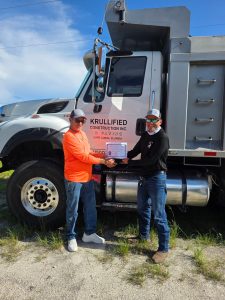
To the truck drivers reading this: thank you. You’re the ones keeping grocery shelves stocked, medicines delivered, and fuel moving — often while the rest of us are asleep. Your safety matters to us. Take the breaks you need. Use the Electronic Logging Devices to protect yourself, not just to pass an audit. And if you see a nominee-worthy colleague out there going above and beyond, nominate them for our Safe Driver of the Month award.
Driving Toward ZERO, Day and Night
Every safe mile — sunrise, sunset, or midnight — is a mile that honors Dave Fons’ legacy. Whether you drive for a living or just for vacation, the habits you build tonight could save a life tomorrow.
- Explore our free safety resources for drivers and professionals
- Get involved with the Dave Fons Memorial Fund
- Request a free safety sign for your community
Stay alert out there. Drive toward ZERO.