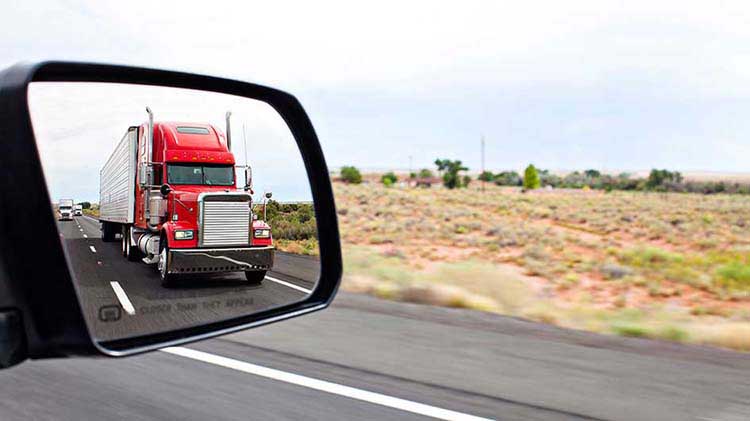
Every day, millions of commercial trucks share our highways and local roads with passenger vehicles. These trucks deliver the goods that keep our economy moving — but their sheer size and weight demand respect and awareness from every driver on the road.
At the Dave Fons Memorial Fund, our mission is to drive toward ZERO crashes. That starts with education. Whether you’ve been driving for decades or just got your license, these essential tips can help keep you and the truck drivers around you safe.
Understand the Blind Spots
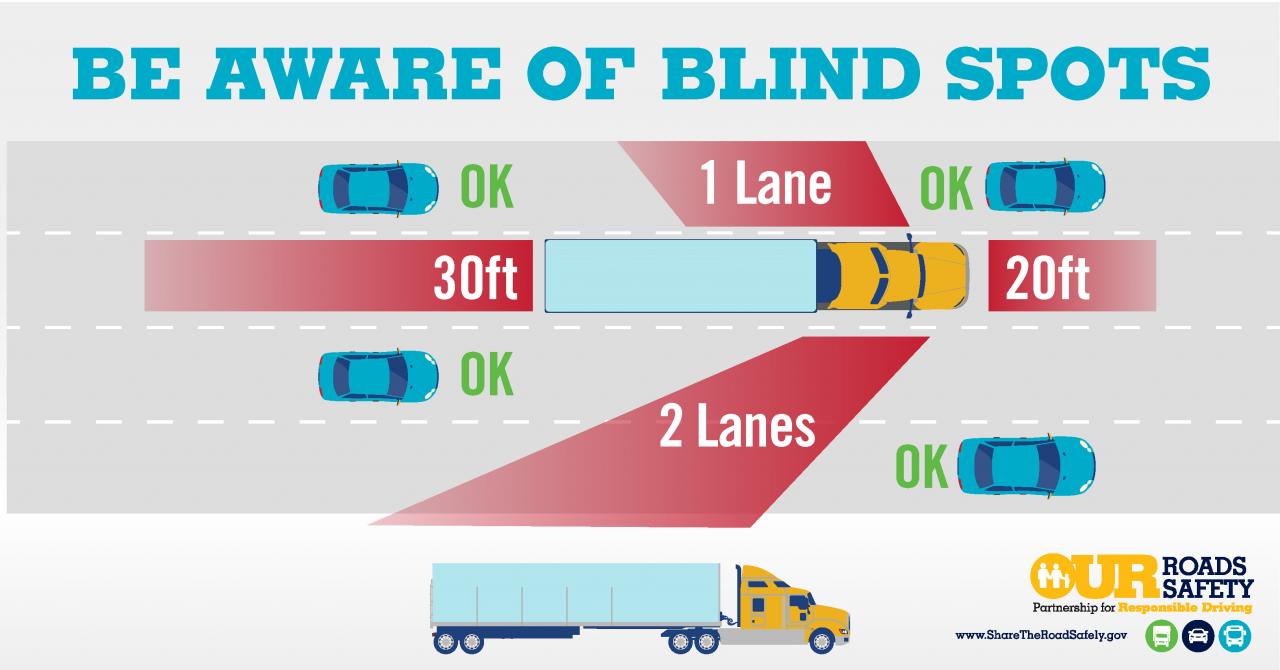
Commercial trucks have significantly larger blind spots than passenger vehicles — and they’re in places you might not expect. Truck drivers call them “No-Zones”:
- Directly behind the trailer — If you can’t see the truck’s side mirrors, the driver can’t see you. Stay back at least 30 feet.
- Along the right side — This is the largest blind spot, extending across multiple lanes. Never try to pass a truck on the right, especially at intersections.
- Along the left side — A smaller blind spot exists just behind the cab on the driver’s side. Pass quickly and don’t linger.
- Directly in front of the cab — Cutting in too close after passing means the driver may lose sight of you entirely. Make sure you can see the full truck in your rearview mirror before merging back.
A simple rule of thumb: if you can’t see the truck driver’s mirrors, they can’t see you.
Respect Stopping Distances
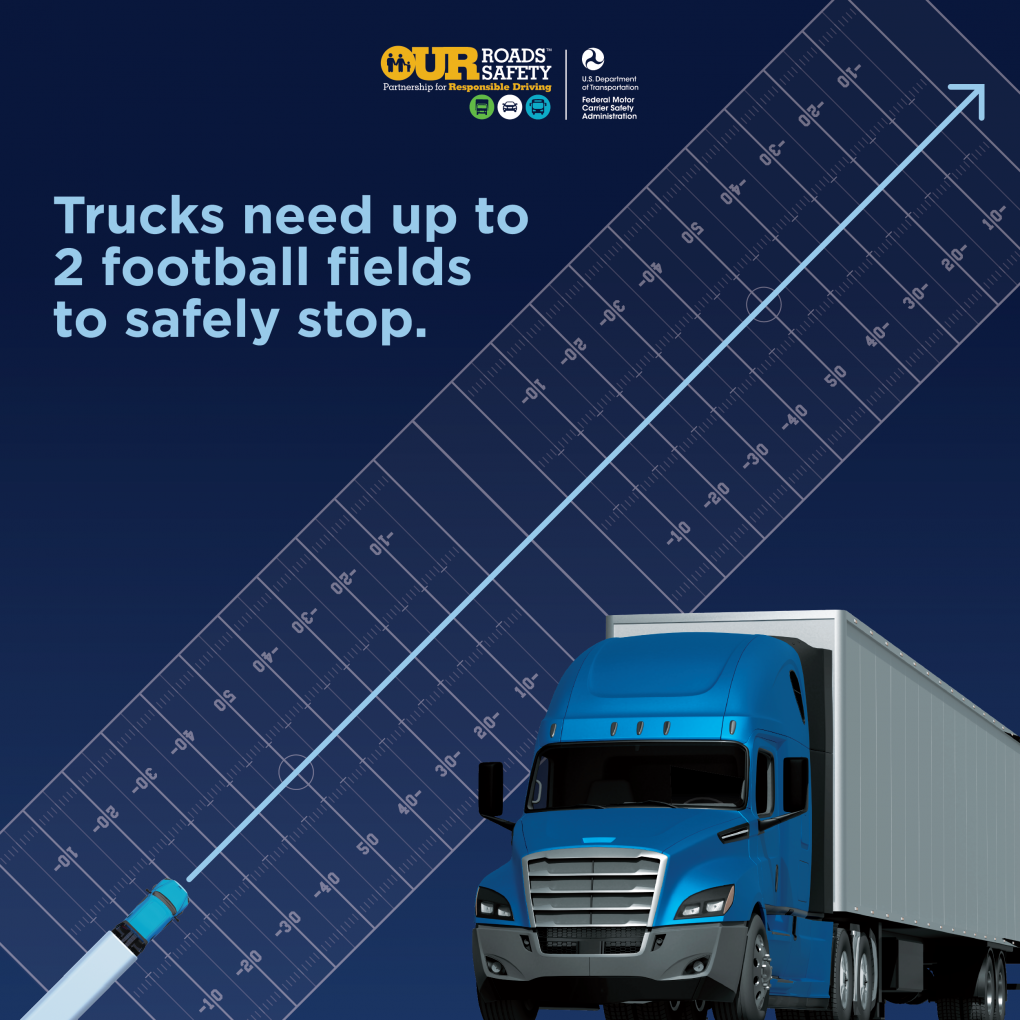
A fully loaded tractor-trailer weighing 80,000 pounds needs roughly the length of two football fields to come to a complete stop at highway speed. That’s nearly 600 feet — compared to about 300 feet for a passenger car.
What this means for you:
- Never cut in front of a truck and brake suddenly
- When following a truck, maintain at least a 4-second gap
- In rain, snow, or heavy traffic, increase that gap even further
- If a truck is following you closely, don’t brake-check — safely change lanes and let them pass
Pass Safely and Predictably
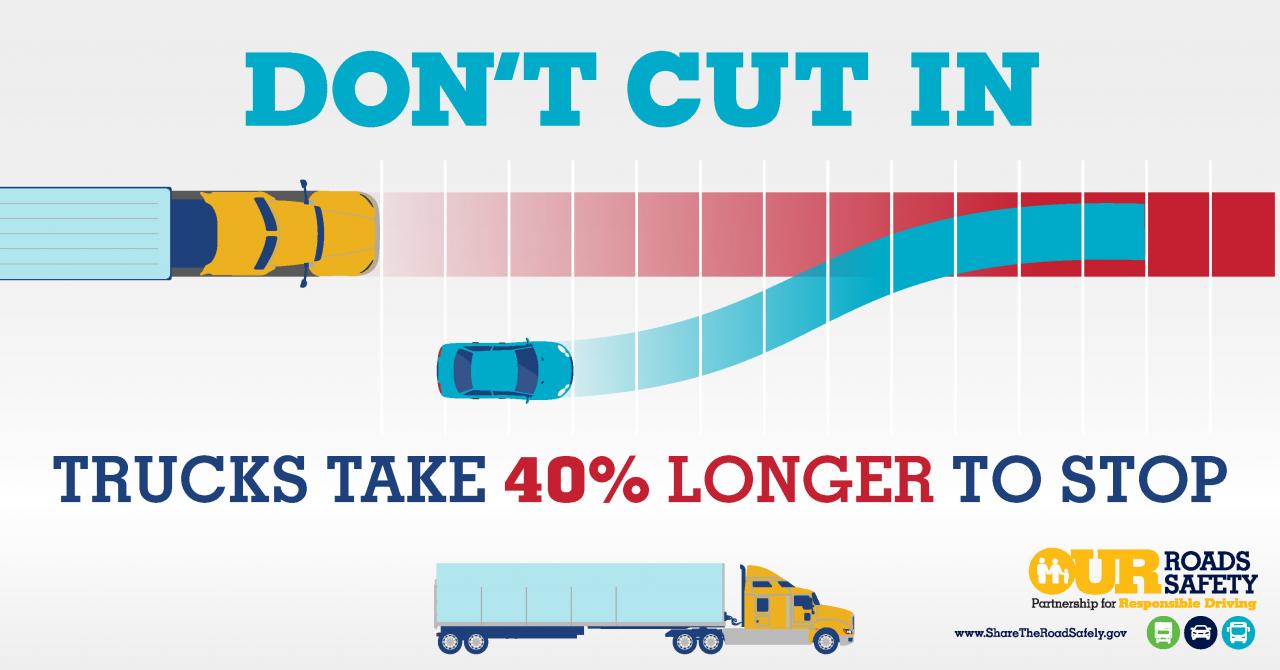
Trucks are limited in how quickly they can accelerate and maneuver. When you need to pass:
- Always pass on the left — the driver has better visibility on that side
- Signal early — give the truck driver time to anticipate your move
- Don’t dawdle — accelerate past the truck, don’t cruise alongside it in the blind spot
- Merge with room — wait until you can see the entire truck in your rearview mirror before pulling back into the lane
Watch for Wide Turns and Leave Extra Space
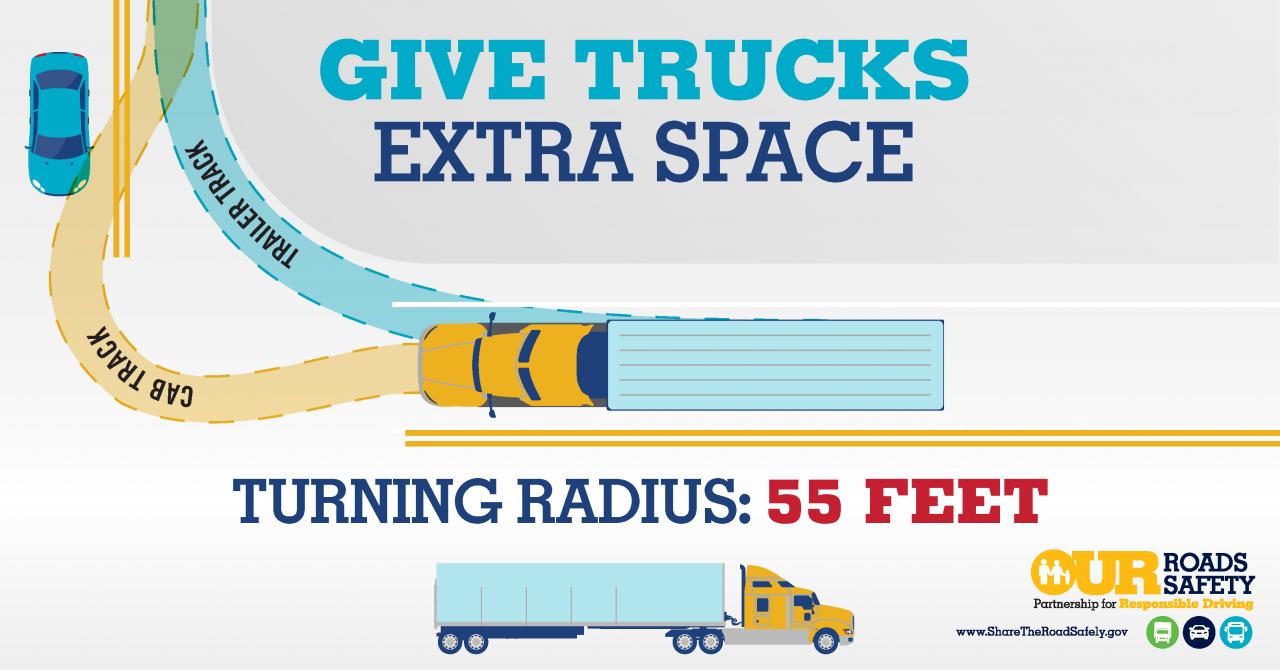
Trucks need significantly more room to turn, especially right turns. A truck making a right turn may swing wide to the left first. If you see a truck signaling a turn:
- Never try to squeeze between the truck and the curb
- Stay well behind the truck until the turn is complete
- Watch for “This Vehicle Makes Wide Right Turns” signs on the trailer
Stay Alert at Intersections
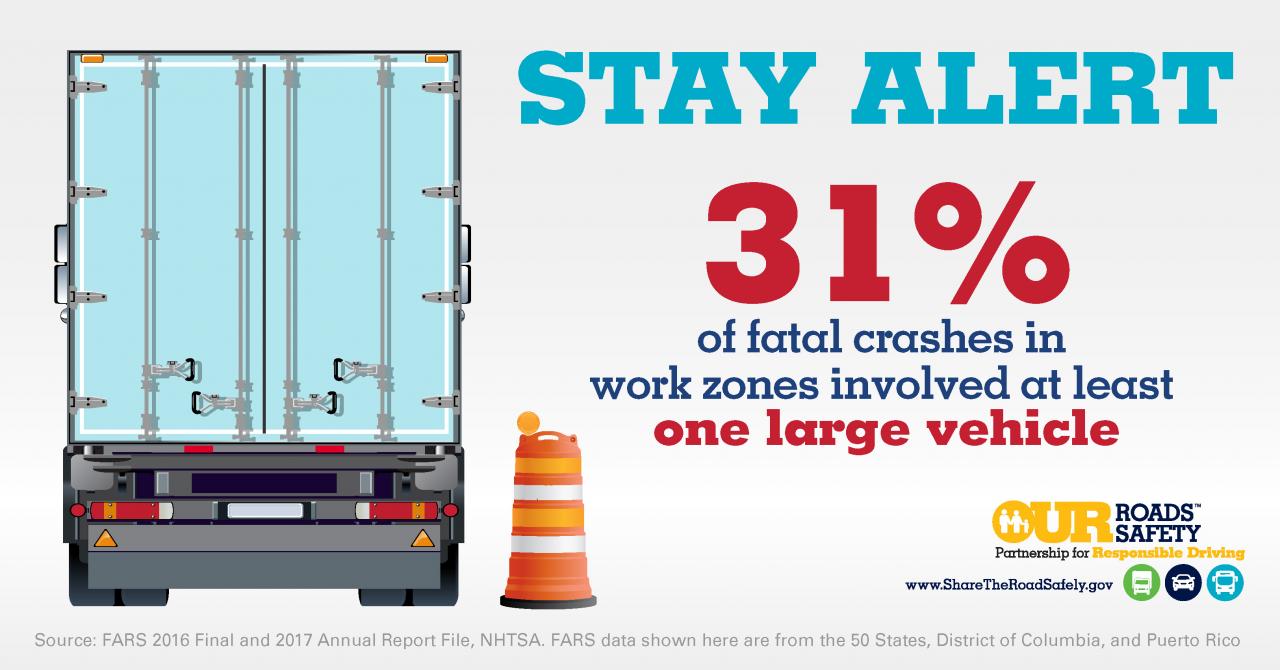
Intersections are where many of the most devastating truck crashes occur. Dave Fons, our organization’s namesake, was killed at an intersection when a fully loaded dump truck ran a red light — a sobering reminder that even experienced professionals can be victims of someone else’s negligence.
Protect yourself at intersections:
- Look both ways before proceeding on a green light — a truck running a red may not be able to stop
- Don’t race to beat a yellow light, especially when trucks are approaching from cross streets
- Make eye contact with truck drivers when possible to confirm they see you
- Be patient — trucks need more time to clear an intersection
What Truck Drivers Wish You Knew
Professional truck drivers are some of the most skilled operators on the road. Many have driven millions of miles safely. Here’s what they want you to understand:
- They’re professionals, not obstacles. Most truck drivers take safety extremely seriously — it’s their livelihood and their life.
- Road conditions affect trucks differently. Wind, rain, and ice have a much bigger impact on an 80,000-pound vehicle than on your sedan.
- Your patience saves lives. Giving a truck an extra few seconds to merge, turn, or stop could prevent a life-changing crash.
- They’re someone’s family. Every truck driver on the road is a parent, spouse, sibling, or child — just like you.
Join Us in Driving Toward ZERO
Truck safety isn’t just a trucking industry issue — it’s a shared responsibility. Every driver on the road plays a role in preventing crashes.
Here’s how you can make a difference today:
- Nominate a Safe Driver — Know a truck driver who goes above and beyond for safety? Nominate them for our Safe Driver of the Month award.
- Request a Safety Sign — Help spread awareness in your community with a free truck safety sign.
- Get Involved — Volunteer, donate, or attend one of our events to support the mission.
Together, we can honor Dave Fons’ legacy and make our roads safer for everyone.